Book Review: Strange the Dreamer

Spoiler Free.

Image result for strange the dreamer

Going into my last finals week (ever) I was looking to read something relaxing and fun. I wanted something low commitment, but still interesting enough to hold my attention after a long day of studying.

Strange the Dreamer is not the book I should’ve read.

Instead of casual and fun, I got a whirlwind of fascinating and truly moving storytelling. I couldn’t put it down once I got to around the hundredth page. Screw tests and essays, I had to find out the mysteries of the lost city of Weep. 

The characters are fantastic–in both senses of the word. Not only are they beautifully written, but they all have elements of fantasy that make them interesting and meaningful. Lazlo Strange is a wonderful protagonist to follow throughout the novel, as is the other narrator (who shall remain a secret). Lazlo is every book nerd’s dream. The profound love he feels for books of any kind, in addition to being a genuinely caring person who desperately wants to help in any way he can and understand the complexities of a situation, makes his perspective a privilege to read.

Laini Taylor has created a remarkable world full of dazzlingly real and complex characters. The “god spawn”–children of the gods–have given Laini the perfect opportunity to discuss the horrors of war. Taylor does not take the easy way out, however. What the reader finds as they move through the novel is that each side has a multitude of extremely valid, important points. That there is no easy solution. 

This is more where Taylor shines. The dual-narration is a fabulous technique used by a skilled author to ensure none of the situation’s nuance is lost on the reader. There’s so much more to this than good and evil. And, perhaps quite bravely, Taylor does not allow herself, her characters, or even the reader to easily pick one side. The reader can easily ability to justify even the worst actions by either party, which is perhaps what makes this fantasy oddly realistic.

In the end, each faction has committed horrors, and those remaining have been shaped so greatly by them that the cycle of violence continues.

I was entirely immersed in the world and involved in the characters. And that ending. Wow. I stayed up into the night to finish it, and this review has taken so long because I needed to recover from how much the book moved me. The themes of inter-generational hate, how fear of a thing can be passed down through the ages. 

With this book, knowing less is better.A reader who comes into this world with no expectations except to be amazed will have the best experience. It’s a wondrous work, and Taylor’s masterful writing allows you to fully submerge. You struggle with the characters, you feel their pain and indecision. 

Strange the Dreamer ended up being the perfect book to launch me back into reading for fun, and I cannot suggest strongly enough that you read and experience it. Experience it and fall in love with it as I did. 


Image result for strange the dreamer


Update: The sequel, Muse of Nightmares, will be released in the US on October 2nd, and you can bet I’ll be getting my hands on it as soon as possible.
50 Book Challenge

50 Book Challenge

This year, I decided I’d do the 50 Book Challenge. This is a wake up call for those who think they read a lot until they physically keep track of it and realize they’re not-so-impressive. I thought I read books left and right, but damn do I feel inferior now. After deciding to do this, I checked and realized I’d only read eight books to date. Pathetic. This challenge probably won’t end well…

Here’s a list of the books I’ve read this year in the unattainable hopes of succeeding at the challenge.

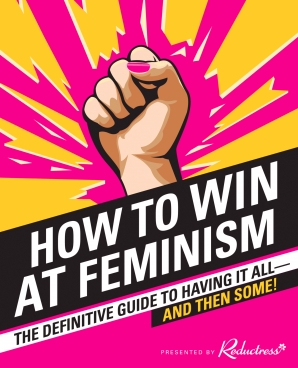
  1. How to Win at Feminism by Reductress

Image result for how to win at feminism

A book made entirely out of sarcasm is a book I’ll enjoy. Basically, the website Reductress has written a book that makes fun of the weak form of feminism that seems to be prevailing in certain areas. I’m talking about the kind that gets abused by companies to sell products, or by celebrities to gain popularity. I think I’ve heard it referred to as “bubblegum feminism”. Reductress tears this perversion of an important movement into pieces, letting everyone know that actions speak louder than words.

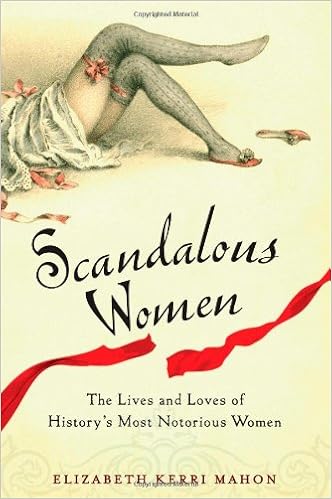
  1. Scandalous Women by Elizabeth Mahon

Image result for scandalous women by elizabeth mohan

I’ve already reviewed this book, but in summary it is definitely a delightful read. Though it focuses too much on white society women who were only scandalous when judged against their lovers, Mahon includes a lot of stories about some very interesting women. Worth a read, but perhaps more to spark your own research into the topic.

  1. Hausfrau by Jill Essbaum

Image result for hausfrau by jill alexander essbaum

Hausfrau is reminiscent of Anna Karenina, but just different enough to warrant a reading all its ownSet in present-day Switzerland, the protagonist feels completely isolated as an American expatriate living in a country where she knows nobody but her husband and doesn’t understand the language. She has multiple affairs while her husband works at a Swiss bank, leaving her empty and desperate for something to bring excitement and wonder to her life. Meaning. Being inside her head is a thought-provoking experience. She is a complex, multi-faceted character who feels the anxiety and boredom of her life intensely. Essbaum manages to do what many writers have tried and failed to do, in my opinion: keep the reader engaged while describing listlessness and frustration with daily life.

  1. The Bean Trees by Barbara Kingsolver

Image result for the bean trees

Originally, I borrowed The Poisonwood Bible from the library by this author. It’s her best-known book and was already on my To- Read list, but I was going back to school before I could even pick it up. A friend, however, let me borrow The Bean Trees and I tore through it during my week before classes. It was a great savior from mind-numbing boredom and talking to myself. Its ideas about family and responsibility are lovely. Taylor is at a diner in the middle of escaping her dead-end town when a Native American woman places a baby in her front seat and leaves. From that moment on, Taylor is a mother to the kid, going through all the struggles of having a child without any documentation. Published in 1989, the events have, I think, only managed to become more relevant.

  1. Pachinko by Min Jin Lee

Image result for pachinko min jin lee

To sum up quickly (I wrote a review of this some weeks ago), Pachinko is a generational story about a Korean family displaced in Japan. They go through poverty, discrimination, and intense loss and somehow manage to hold themselves together. This book was just superb, and I’d highly suggest reading it. I just don’t know what more I can say about this great addition to literature at this point without sounding like a broken record.

  1. Milk and Honey by Rupi Kaur

Image result for milk and honey

Kaur originally found fame on Tumblr, but she is definitely talented. Her debut book of poetry has four parts, each chronicling the stages of a doomed relationship. If you’re going through a breakup or have been recovering from one, as I was when I read this, Milk and Honey feels like someone finally understands the pain of heartbreak and puts it into the words you’ve been desperately trying to find. It’s simplistic and meaningful without being emotionally manipulative, with illustrations that hit you right in the heart.

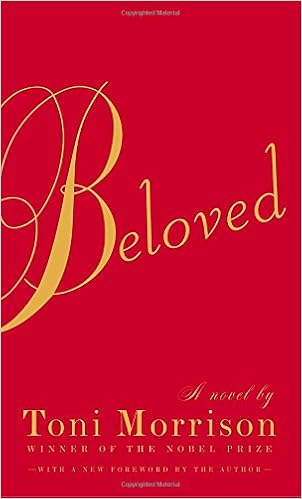
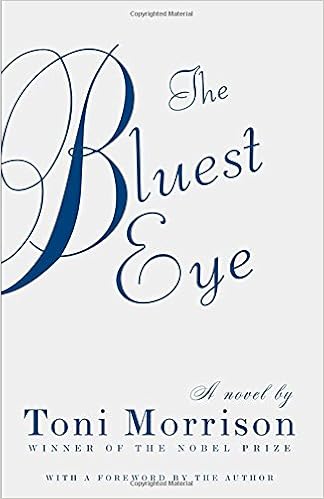
7/8. Beloved and The Bluest Eye by Toni Morrison

Image result for beloved toni morrisonImage result for the bluest eye toni morrison

These were books I’d heard so much about and was desperate to read for quite some time. She’s a prolific author, and stories like Beloved and The Bluest Eye refuse to shy away from incredibly difficult topics. These books make you uncomfortable while giving a rarely acknowledged perspective on slavery and racism in America. Morrison is another writer with a simplistic, honest style that makes the reader feel every word. These were a privilege to read, and I’ll be reading more of Morrison in the future.

Book Review: Pachinko

Image result for pachinko min jin lee
Book cover art

Pachinko is a game of chance. Rigged each morning so that only certain machines will win, the public comes en masse to try to win big. Very few win it all.

It’s an apt metaphor for the family Min Jin Lee has created with her beautifully-crafted book, Pachinko. The story of a Korean family who moves to Japan, it primarily follows Sunja as she navigates being a poor Korean, a single mother, and an even poorer Korean expatriate. The book switches narration often between characters, but Sunja serves almost as a touchstone for the reader. She is a young Korean girl who becomes pregnant by a man who is already married. When a missionary proposes to her in exchange for saving his life, she moves to Japan with him to work in a church. Unfortunately, Japan is not the most welcoming place to those it has colonized. Sunja and her husband face endless bigotry as they try to make a living, as do Sunja’s two sons and, eventually, their sons.

This is a novel about female strength. Not in an overt way, but like its female characters, it quietly pushes and successfully shares its ideas. Sunja’s mother has a motto: “a woman’s lot is to suffer”. Continually, the women in Pachinko are the ones holding everything together and keeping the family in its varying forms afloat. When her brother-in-law forbids it, Sunja and his wife create and run a successful business that keeps the family from starving. When the family must seek shelter during World War II, the women work for their keep on a farm safe from the bombs, ensuring the continuation of their bloodline.

Image result for pachinko min jin lee

Continuously, these women work for the bare minimum, but do so for the benefit of their entire family. They are truly the backbone of what is outwardly a matriarchy, providing when the men fail to do so and quietly being the reason the men end up succeeding. They do all of this in a country that, quite honestly, hates them. Sunja’s sons deal with bullying and discrimination at school, leading to an exploration of identity. Noa, for example, spends most of his childhood wishing he was Japanese and feeling conflicted about his Korean ancestry.

Pachkino tells the story of one family, but it is a portrayal of a part of history that is not shared with the West. Many Korean families that were told that Japan would bring them prosperity only to be severely disappointed. Min Jin Lee has made a fantastic, moving, and important book.

Update: For the past year, Pachinko has been my go-to whenever someone has asked for a book recommendation. I’ve yet to hear someone say they’ve been anything but thrilled with it.

Image result for pachinko min jin lee
Author Min Jin Lee

Book Subscription Boxes: Book of the Month

Can I just say, I’ve rarely seen such a gorgeous book? I got my first book subscription box book, Pachinko by Min Jin Lee, and it’s glorious. The front cover has these lovely green and blue pastels with reds and oranges in the center illustration. That’s a high quality hardback, right there. And it has BOTM printed on the front cover in a very subtle, classy symbol. The same is on the spine, and on the back is printed “I Heart BOTM” with “February 2017” in smaller letters bellow it. It just feels crisp and new.

Once you take off the dust cover, you have a hardback with the Book of the Month colors, and, again, BOTM printed in the bottom right corner. Honestly, it looks so nice. “February 2017” is reprinted, as well. Basically, this book is everything you love about hardbacks with some special nuances thrown in for nostalgia sake. I’m definitely keeping this book, and it’ll always be fun to look at it and remember where it came from. It’s almost like a bit of my own history.

Image result for pachinko book of the month

Book of the Month is a really simple service. Through a link of an affiliate, I was able to get my first book for just $5.00. You may remember me saying this already, but I’m honestly just so excited to have received such a beautiful copy of a book for so little.

A significant difference between Book of the Month and other subscription boxes is that it’s just the book. Honestly, I’m very relieved not to get the little doo-dads and trinkets that come with a lot of other boxes, mostly because I’m simply not interested in them. They’ll sit on my desk and gather dust until I throw them out. Book of the Month just sends the book and a personalized bookmark with a message from one of the selectors. I know what I’m about, and all I want are books.

Image result for pachinko book of the month

Image from: http://modernmrsdarcy.com/book-month-club-review/

I’m pretty sure part of the reason they can send such beautiful books for such a low price is specifically because they don’t mess around with nick knacks. I fully appreciate this. I’m a pretty simple person with simple tastes, and Book of the Month really reflected that. I paid for lovely book, got it, and am 100 pages into reading a quality work of literature.

The selectors are definitely dependable–Pachinko is a wonderful book. The storytelling is great, and there’s an excellent balance between dialogue and description—not an easy task for a writer. The family aspect of the book is key, and though the characters aren’t incredibly complex, they are refreshingly good.

I enjoyed this book box with all my nerdy, bibliophilic heart!


Books I’ll Be Reading Again

As I talk to other people who love books and get more involved in the book community, I notice that there are a lot of books that I’ve read and failed to appreciate. You know the feeling, when you read a book six years ago and you’re pretty sure there’s a reason everyone loved it, but you failed to catch the hype. Maybe you were too young (I often was) or maybe you were just distracted. Regardless, I want to give these books another chance to influence me.

It is entirely possible that some, if not all, of these are simply not for me. That’s fine, but they have stuck out in my head as books that I, personally, didn’t put enough effort into enjoying and deserve another go.

  1. Jane Eyre by Charlotte Bronte

Jane Eyre is one of those novels that is internet-popular for how important and meaningful its quotes are. And yet, somehow, when I read it in eighth grade, it failed to make an impression on me. I know for a fact that I read it cover to cover, but I also know that I took long pauses in between, saw reading the book as a chore, and generally was in a terrible mood for all of that year. This might have influenced my opinion on the book, and I want to give it another try in different circumstances.

  1. A Tale of Two Cities by Charles Dickens

This is a book I know I enjoyed at the time, but have zero memory of the plot (besides that famous ending). I read it back in high school for class, so it was a segmented reading process. We’d read fifty pages for class, have a discussion, and then read fifty more. It can be hard to maintain enthusiasm like that, especially for a book written by the man who invented the cliff hanger.

  1. The Princess Bride by William Goldman

I absolutely love this movie, but read the book in sixth grade and have no memory of what happened. Judging from the movie, there was a lot of subtle humor that I missed or wasn’t able to appreciate at the time. It is an immensely beloved book by so many, and as someone who strongly believes in reading the book first, I’m pretty angry that the movie has stuck with me far more than the book.

Book Review: Scandalous Women

While at Heathrow Airport in London, waiting to board my flight back to the States after several fantastic months travelling and studying in Europe, I found myself in the worst situation known to any reader.

I had nothing to read.

Thankfully, there was a shop with books only a few feet away, my plane was delayed, and I had a few British pounds I needed to spend before returning to the land of the dollar. Into the shop I went.

Amongst all the bestsellers and YouTuber books was a section about history. As I’d just spent three months going to historical sites, I was drawn to this section in particular. On the shelf was a book that caught my eye: Scandalous Women: The Lives and Loves of History’s Most Notorious Women. Bingo.

Elizabeth Kerri Mahon’s short, historical book is very enjoyable. Firstly, it’s about some pretty badass women, which I will always enjoy in any capacity. Joan of Ark, Cleopatra, Calamity Jane, and Ida B. Wells are only a small selection of the historical figures covered.

Second, it tells the truth about these ladies. Cleopatra gets the reveal she deserves. After centuries of old men turning her into a sex symbol, she gets the credit she is due as a statesman and leader of her country. The woman was willing to do anything to keep Egypt independent, and she was able to succeed for quite a significant period of time. And then she was erased from history by men who were threatened by her. Ask anyone who Cleopatra is, and they’ll reply that she was the lover of Mark Antony. Ask them about her skills as a leader, and you’ll often come up with nothing.

Can you tell I’m now a big fan of Cleopatra?

Finally, the book is short. The stories are nicely condensed, which is good considering the stories start to really blend together by the end.

The ratio of white women to women of color in the book is a little staggering. The section that features the most women of color, “Amorous Artists”, takes quite a while to reach. Even the section called “Warrior Queens” has only Cleopatra listed, when in fact there are countless queens around the world whose stories could have been referenced.

The issue with this lack of diversity is not only that there are people whose stories are missing, but also that the stories we get begin to sound similar. Most of the women were born into poverty, found love and fortune, then lost it and ended up alone and desolate. There are only so many stories I can hear about the same situation in one single book. Asian and African women are completely missing. I attribute that to a lack of intense research, as a quick Google search will pull up plenty of scandalous, pioneering women who stand out from both of those continents. I feel like the book missed an opportunity to talk about women who aren’t quite as well-known in the West, but notorious in other geographic regions. I would be insanely interested in reading something like that (suggestions).

Scandalous Women is an interesting work. It covers so many periods and countries (in the West, mostly). The book is great on many accounts, but I did begin to feel the stories were repeating themselves. Beyond the stories themselves, the writing style wasn’t that sophisticated (I’m a firm believer that slang doesn’t belong in anything written in third person, especially in a historical book).

Still, I would definitely read another book by Elizabeth Mahon. She takes an interesting look at history that historians are only now bringing to light. These are women that actually had immense power and influence, but have often been pushed aside for the male figures, or to extol their sex appeal. Mahn provides a refreshing change.

Top Five TBR

Besides Anna Karenina (which I’ve already posted about), I have a lot of books I want to read this year—though hopefully this list of my top five won’t take all year. I always have such a long list of “to be read”, but I never really keep track of how well I complete it. This year seems like the perfect time, since I’ve decided to attempt the 50 Book Challenge. I obviously need to keep track of my reading

  1. Pachinko by Min Jin Lee

Image result for pachinko book cover

This is the book I selected from my Book of the Month subscription box, and I’m so excited to start it. The blurbs I’ve read say that it’s one of those books that span generations of a family, which is really just excellent. I love when I can really sink my teeth into a set of linked characters and see where it takes me.

The story follows a Korean family, beginning with a daughter who becomes pregnant and marries in a hurry to prevent disgrace. She moves to Japan with her new husband, and from there she and her family struggle to make this new country ‘home’.

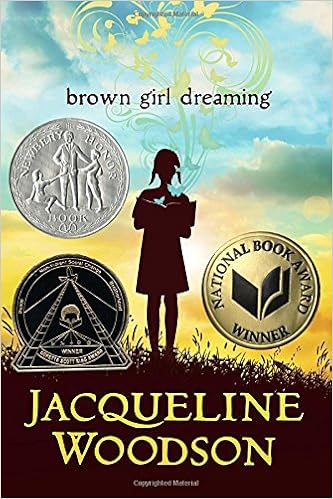
  1. Brown Girl Dreaming by Jacqueline Woodson

Image result for brown girl dreaming book cover

I first heard about this book through Youtube (John Green) and I’ve had its title stuck in my head since then. I admit, it first caught my attention because the author shares a first name with me, but after doing a little research I got interested in the actual story. It’s an autobiographical account told through poetry about the author’s experiences growing up in the 60’s and 70’s.

This seems like a great meld of poetry and narrative storytelling that will both use the medium and deep-dive into a character. I’m not sophisticated enough to appreciate something for its technique alone (plot and characters are always the main appeal for me), so this seems a good way to bridge the gap.

  1. Homegoing by Yaa Gyasi

Image result for going home book cover yaa

After reading Americanah, I became very interested in African literature. It’s not something we often study in classes in the US (the focus tends to be African American authors, not African), and I’d like to work on closing that gap in my knowledge a little bit.

This story follows two half-sisters born in Ghana, one sold into slavery and another married off to a slaver. Apparently, the enslaved sister is taken to America and her future generations grow up in slavery while the married sister’s descendants deal with their history and participation in the slave trade. I seem to be very interested in generational stories. From the title, I assume that this is the story of how the future generations return home to Ghana? Not entirely sure, however. Reading two stories in such direct contrast with each other in terms of their experience should be fascinating.

  1. The Essex Serpent by Sarah Perry

Image result for the essex serpent book cover

This book came onto my radar while I was watching booksandquills’ latest video about her trip to Essex, in which her friend is reading this exact book (most appropriate). After looking through the Goodreads description, it seems to be a mystery covering the conflict between science and religion through two characters who “agree on absolutely nothing…[but] find themselves inexorably drawn together and torn apart”. I’ve heard great things about this one, and it should make a nice change-up in my reading.

  1. Fig by Sarah Elizabeth Schantz

Image result for fig book cover

I found Fig through a Pin specifically about books that deal with mental illness. The story follows a mother and daughter, both struggling with mental health problems. The mother is slowly losing her grip on reality as her schizophrenia gets worse, while her daughter struggles to take care of her mother and herself. It’s been described as a very honest portrayal of mental illness which, as someone with mental health issues, I always appreciate. I’m also desperate to know more about schizophrenia, since it is so incorrectly portrayed in most media. It is a very misunderstood illness, so reading a book that treats it appropriately should be enlightening.

Book of the Month.

This is not an ad, it is not a sponsor, it’s just something cool that I figured people would enjoy information on.

There has been this phenomenon on the internet—and elsewhere—for a long time called “subscription boxes”. Some of them are beauty related, some are snacks, and some…are books. That’s right, you can pick a book to come right to your door, along with other cool shit you might enjoy or throw out (still not sold on that part). After watching PeruseProject’s most recent video about exactly this topic, I decided I’d try it out.

It seems like a great system, and a good way to get books for a relatively discounted price (I also followed a link from the blog My Subscription Addiction and got a coupon). My goal this year was to diversify the authors and characters I read about, so I’ve selected Pachinko by Min Jin Lee for my first book.

From the blurb that this subscription site, Book of the Month, gives me, this is a story that goes across generations of a Korean family living in Japan. I love books that span lifetimes, mostly because I love seeing exactly how choices affect future generations. It gives a link to the past and the present that I worry people often forget about. Pachinko sounds both heart-wrenching and fascinating, and I’m excited for it to come in two days!

Part of the reason I wanted to diversify my reading was because I want different stories and perspectives. My favorite part of reading is learning something new, not just academically, but emotionally and socially. I have one very limited perspective, and I love to broaden that.

Another reason is that I have definitely seen the recent news about representation in media. I consider books to be media, and my favorite kind. They spread a message to huge numbers of people, making them extremely influential. I was cleaning out my bookshelf during my most recent break from school and found that a stupid majority of the authors I’ve been reading most of my life have been white, heterosexual females from either the UK or the US. That’s not a terrible thing or anything, but it did illuminate  why I had felt recently that I was reading the same story over and over again.

Basically, I’ve gotten complacent in my little bubble, and I need to branch out or I’ll end up stunted. Simple as that.

PeruseProject talks about wanting to read more diversely in the video linked above. With this inspiration, I looked up my own monthly subscription box for books and discovered Book of the Month. The coupon (also linked) allowed me to get one month for $5 and free shipping. If I choose to continue, the rate is $14.99 per month for one book, with the ability to add on two others for $9.99 if I really can’t decide!

Personally, I think this is a marvelous way to keep people reading. Half the reason I don’t read as much during the school year is that I don’t live near any bookstores. It just takes more effort, time, and planning to get to a bookstore while at school. Not to mention, I’m basically broke and reading for classes, as well. This just seems more manageable. We shall see.

As I said, I haven’t received the box yet, so I can make no attestations as to whether this subscription would at all be worth your time. I hope it will be, but regardless this is an opportunity to get at least one book for very cheap. I jumped at the chance, hopefully others will, too.

Tolstoy

Image result for anna karenina novel
Barnes & Noble Classics edition

Right now, at this very moment, I am 300 pages into the over 700-page Anna Karenina. It’s a monstrous book, and probably could function quite effectively as a doorstop, but here’s the thing: it’s wonderful.

Tolstoy is intimidating. His novels are giant, with ten or more main characters each, and everyone has a first name, nickname, and several family names. He uses them interchangeably, and many characters even have the same name. It’s like he wanted us to be confused.

But once you sift through, say, fifty pages, you get one of the most stunning portraits of characters you may ever encounter. Because it’s so long, each character is fleshed out to the extreme. You know their hopes, their dreams, and their failings. Tolstoy’s skill is switching tones to match whatever character you’re reading at the time.

Alexey tends to have long, rather boring, paragraphs where he considers state matters, who might’ve bested him lately, and anything to do with work. His wife is hardly in his thoughts, except when he is being embarrassed by her and must coldly and mechanically work out how he will maintain his good reputation.

In contrast, Vronsky’s thoughts are full of Anna and money. These are his primary concerns, and when you’re reading the character, you’re reading what seems to be his actual thoughts. He loves Anna desperately, but is heading into dire straits at this point of the novel, trying to reconcile his feelings with the fact that his family disapproves and is withholding much needed cash.

Tolstoy’s ability to transport a reader into a character’s mind is absorbing, not to mention wonderfully skillful. It moves you through pages that could be considered dense, or maybe wordy, with vigor. With true excitement.

His characters are flawed. So flawed—but you care about them anyway. Anna has (spoiler) at this point told her husband she is in love with another man. She begins passionately, feeling relieved that everything is in the open. She feels freed. Many authors would stop their heroines’ development there. Not Tolstoy. As Anna begins to consider what she’s done, she becomes terrified. Things that aren’t “supposed” to matter to main characters matter greatly to her. She second guesses herself when the social standing she’s always enjoyed is threatened, and is enormously tempted to take Alexey’s offer that things can just “return to how they were” when he brings up her beloved son. Love has not put her in a bubble where nothing matters. Anna wants to continue to benefit from her high place in society and from Alexey’s protection.

All the same, she’s angry at his indifference, while being ashamed of herself for her infidelity in a twisting cacophony of emotions. It makes Anna one of the most interesting protagonists I may have ever read. It felt like Harry Potter and the Order of the Phoenix, when Harry is feeling hurt, isolated, targeted while feeling guilty for lashing out at his friends. It’s a complex swirl of feelings that are so human, you forget the character is fictional.

But she is, at heart, a heroine, and realizes that despite the lure, she can’t go back to how life was. Beyond Vronsky as a person, she feels for the first time in a long time. She enjoys that passion in her heart, and maybe even the drama, because it adds some kind of excitement that has been absent from her life. Rather ignored and belittled by her husband on a day-to-day basis, she finds it’s impossible to go back. She makes a difficult decision that some readers condemn her for, but that you also fully understand. Because you don’t want her to go back, either.

Even when you know what happens in the end.